The app makes options feel like a slot machine on purpose. Bright colors, confetti, a chain of contracts begging you to pick one. You tap, you guess, you win a little, you lose a lot, and the platform makes a market in your guesses either way. When the house designs the game, trading more carefully inside it isn't the fix.
The fix is trading on a system you actually own, where the rules are explicit, the entry is mechanical, and the review loop belongs to you, not the app.
This course teaches options without guessing, and the enemy is clear: the gamified, platform-fed habit that turns a serious instrument into a coin flip. You beat it by reversing the order most beginners use. Charts before chains. Thesis before position. Defined-risk structures before naked exposure. The contract is a tool, not a thesis, and most trades, you'll learn, should simply be skipped.
The concrete artifacts you build are real and reusable. A chart-first habit that has you selecting a trade thesis before you ever open the options chain. A defined-risk options template, long calls, long puts, and simple vertical spreads, sized for a small account. A written invalidation rule for every trade, so you know in advance exactly what proves you wrong. And a review-loop scaffold that turns each rep into process feedback instead of emotional storytelling.
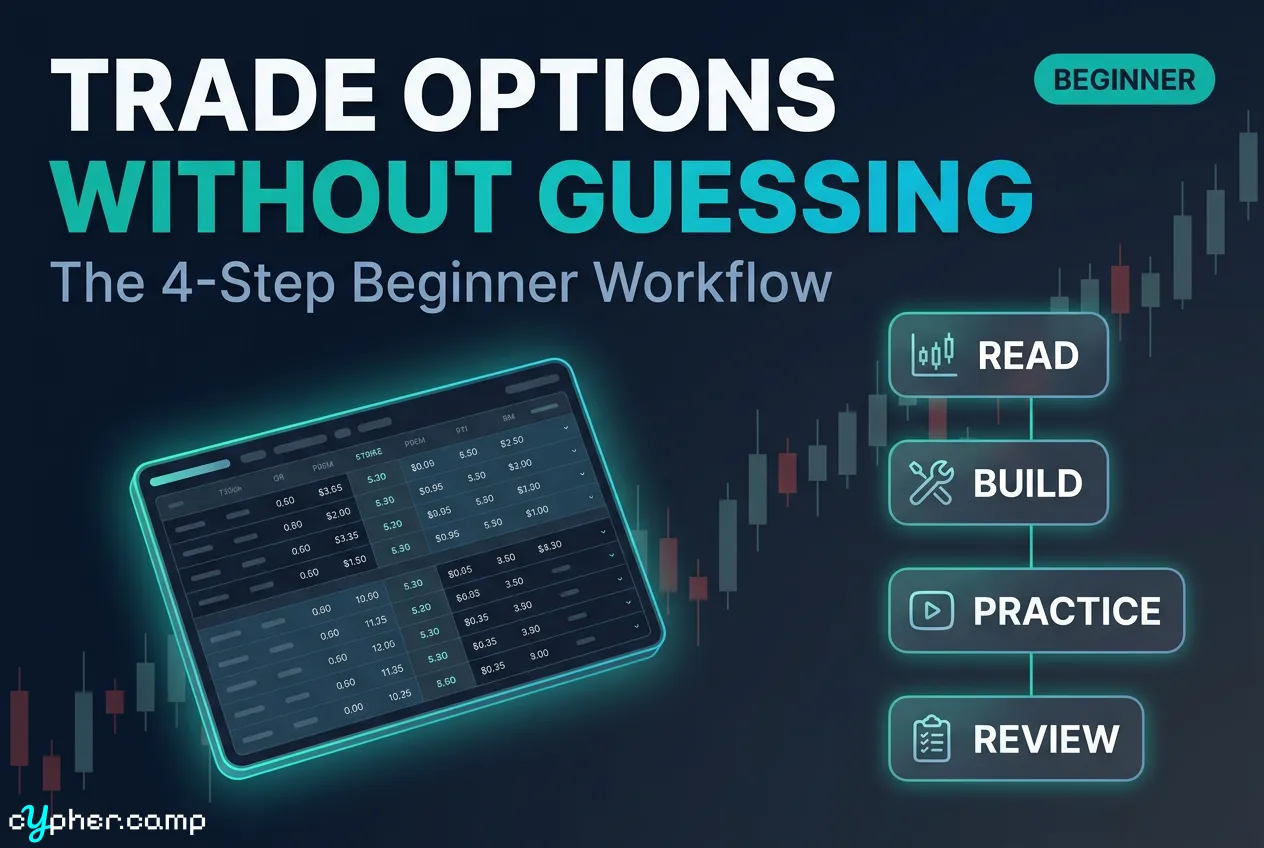
The path is grounded and beginner-paced across roughly 3 hours 35 minutes and four modules. Module 1 trains the chart-first instinct and why most trades should be passed on. Module 2 builds the trade itself: what you're actually buying with a call or put, expiration, premium, and breakeven in plain English, the Greeks (delta, theta, gamma) at the level you'll actually use, and defined-risk sizing for a real account. Module 3 has you practice the ticket, limit orders, mid price, and why market orders punish beginners, with paper reps before any real money. Module 4 closes the loop with exit plans, journaling the rep beyond just profit and loss, and finding the rule break before you blame the market.
The mechanism underneath is operator framing. The Amplified Operator runs trading systems instead of being run by a platform. You'll use AI assistance inside Cypher.camp's Trading Studio to scale the boring parts, paper-trading drills, journaling, risk-pattern checks, while the decision rules stay in your head, not in a landlord app's interface. Agents help you operate your system; they never replace your judgment.
This is education, not financial advice, and it's safe by design. You practice every trade in the simulator before real money is on the line. You build the rules, the template, and the invalidation logic first, then pressure-test them on paper. No profit promises, no guaranteed wins, no naked risk pushed on a beginner.
Why now? Because the longer you trade inside a system designed to profit from your guessing, the more expensive the lessons get. Build your own system first.
When you finish, the workflow is yours: a chart-first habit, a defined-risk template, an invalidation rule per trade, and a review loop you trust enough to eventually run with real money, judgment you own instead of vibes you rent from an app.