It's Tuesday, 8:14, and the pile-up has already started. An email you're dreading. A decision you keep postponing. A messy problem with no clean answer. You've used AI before -- wrote a note once, asked a question once -- but in this moment you don't reach for it, because you never turned a few good experiences into a system you trust under pressure.
That's the gap between the people who get real value from AI and the people who tried it once and forgot. It isn't talent or tech skill. It's that one group has repeatable frameworks for which tool, what to ask, and how to check the answer -- and the other group starts from a blank box every single time.
What you build: a personal AI operating system. By the end you'll have a library of copy-paste prompts, a habit that actually sticks, a tool-selection reflex, and the confidence to become the AI person in your circle.
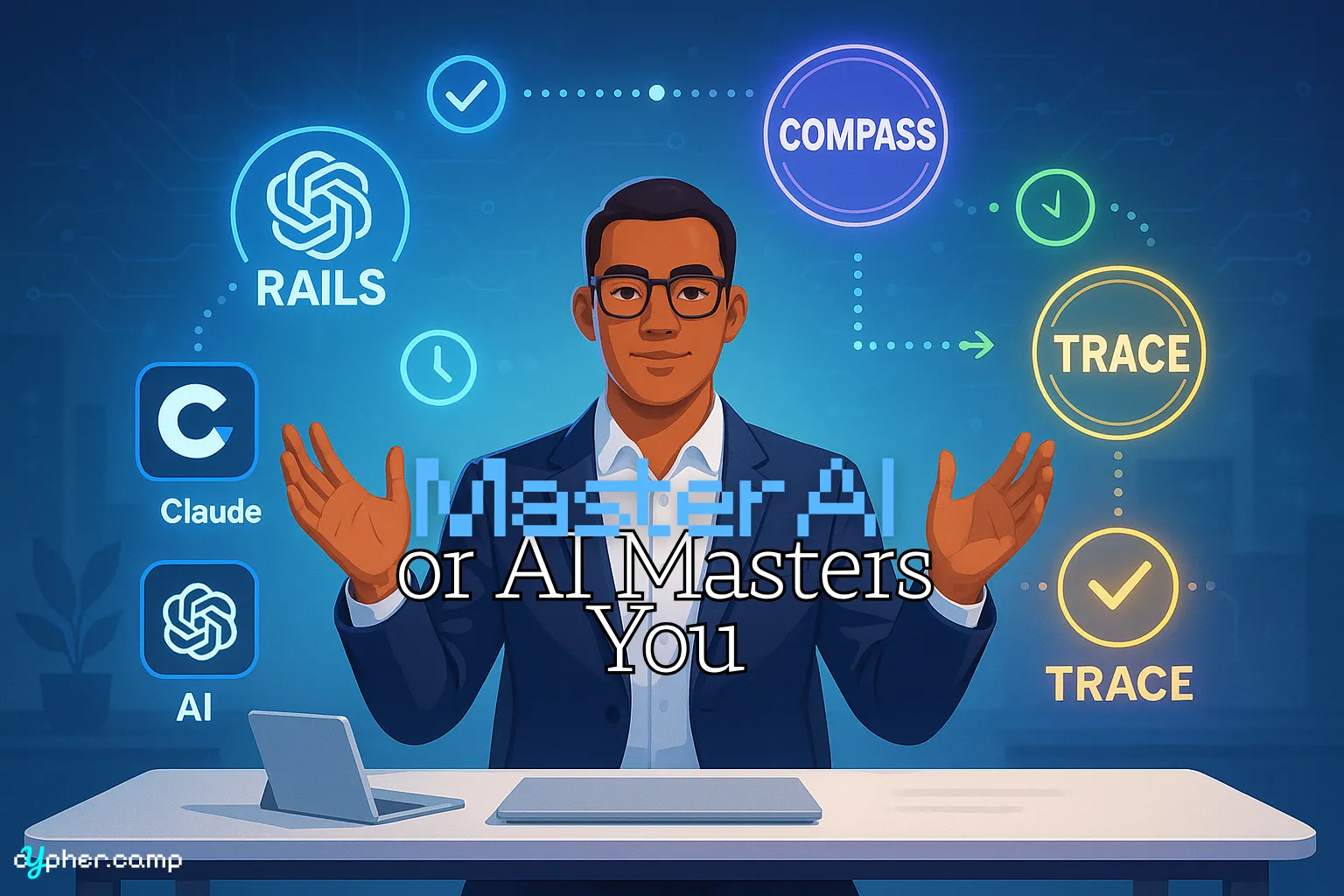
The mechanism is four named frameworks that are really life skills AI makes faster. RAILS, a prompt template for any situation. SAF, a thinking framework for better decisions. COMPASS, for messy multi-dimensional problems like caregiving, career changes, or financial calls. TRACE, for using AI ethically and knowing what to keep private. You'll run them on real work -- a dispute letter to an insurance company, prep for a doctor's appointment, whether to refinance.
The course is structured to compound across 4 modules and 24 lessons. Module 1, Foundations: pick your tool in 30 seconds, learn the 5 types of AI you'll actually use, spot mistakes, and lock in safety. Module 2, Professional Application: research-backed patterns, a professional email in 2 minutes, thinking like a consultant, and verification. Module 3, Integration & Habits: your first week exactly, five copy-paste prompt patterns, tracking wins, building the habit. The bonus module scales the same skill -- becoming your team's AI expert, multi-AI workflows, quality control, and running your first AI operating system end to end.
Time to value is immediate: lesson 1 you pick your tool, lesson 2 you get your first good answer, and the first week you start clawing back hours. By lesson 2 of Module 1 you can already pick between ChatGPT, Claude, and Gemini for any task -- and spot AI mistakes before they cost you money or credibility.
Here's why owning this matters. The frameworks don't change when the tool changes -- only the context does. The same skill professionals lean on is the one you'll hold, so you're never trapped renting a single platform that can shift its rules, price, or quality on you. You direct the AI with a framework. The tool doesn't direct you.
You can start from zero -- this builds on the basics but assumes only that you can chat with AI, and every framework gives you a safe, repeatable path so you can't get hopelessly lost. Walk in with scattered one-off experiments. Walk out with a daily operating system, a prompt library, and a habit you'll still be running next month.